

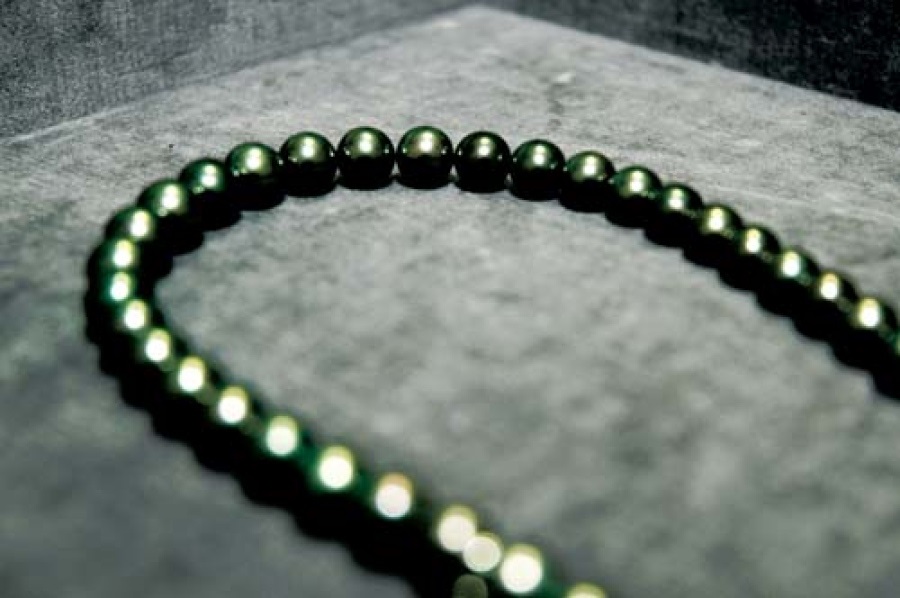
Akoyo is a generic name for saltwater pearls found in Japan. Unfortunately, Mikimoto quality label can be misleading. Pearls that are cultivated under stringent patented process on the bay of Ise in Honshu Japan are genuine Mikimoto quality pearls. In 1930`s, Mikimoto purchased a small island on Ise coast, so the name has become a popular international brand.
Mikimoto quality and grading
Why do buyers pay more for the Mikimoto pearls? Mikimoto uses variety of grading methods independent from the GIA grading standards. AAA is the highest quality among four grades. AAA has four subgrades like AAA1, AAA2, etc. The 1 represents little more flecked surface. Highest grades means mirror-like reflection, while lower grades display good-clear reflection. In general, buyers buy grading valuation certification for insurance needs and not to resell.
How to distinguish real Mikimoto pearls?
All the genuine Mikimoto pearls have a unique line pattern or roadmap, which the expert pearl jewelers recognize it with the help of a microscope. Even if he piece is marked with an ‘M’, it guarantees settings and not pearls. Replacement necklace clasps can easily be re-knotted by unscrupulous dealers and then sold for more. So how first time buyers can distinguish it? One easy way is to remember that the little rose or pink tint or undertone is not available in 95% of Akoya pearls.
Mikimoto clasps can be bought from black market because original ones can get damaged or broken. Unfortunately, unscrupulous sellers also use them to sell a $10.00 pearl necklace for $1000 with fake or real Mikimoto clasp. Fortunately, Mikimoto pearls are best evidence as soon as you get familiar in identifying the difference from other pearls.
Majority of Mikomoto jewelry collections include ‘M-circle’ as their trademark, which assures high standard of integrity and quality. A jewelry purchased with this trademark means Mikimoto is liable for lifetime. There are exclusive lines of pearls distributed by Mikimoto but never confuse it with Mikimoto brand. Even if these lines don’t fulfill Mikimoto control standards, they represent high quality pearls having good value. Mikimoto export items are marked with ‘S’, ‘SIL’, ‘585’, ‘750’ and ‘14K’.
