

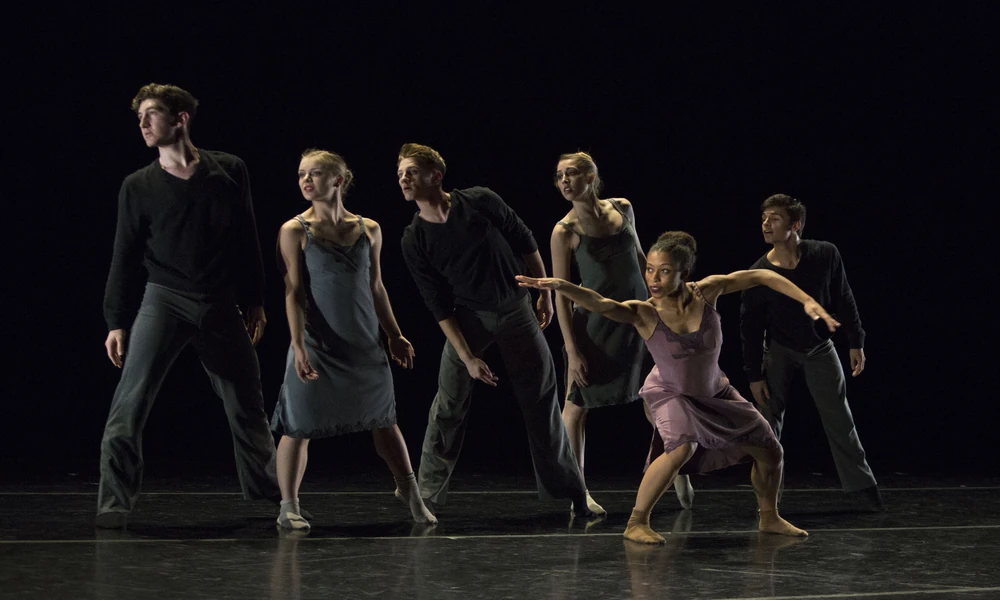
Learning choreography and presenting it to an audience involve related skills. A dancer needs to remember movement while also considering timing, expression, and how the performance reads beyond the practice space. Flair Entertainment’s Road To Performance program addresses that connection through training in choreography, stage presence, technique, musicality, and performance dynamics.
For students interested in showcases, recitals, or other live performances, this gives training a specific direction. Practice can address both the sequence itself and the choices that shape its presentation. Remembering the next step remains important, but it becomes one part of a broader performance goal.
Giving Choreography a Structure
A dance sequence is easier to study when the dancer understands how its sections connect. Changes in direction, repeated phrases, and musical cues can provide reference points during practice.
Flair Entertainment’s program includes learning choreography alongside refining technique and styling. That combination connects the structure of a routine with the details of its execution.
Students can make rehearsals more purposeful by identifying which section needs attention. A transition may require slower repetition, while a familiar phrase may be ready for closer work on timing or expression. Focusing on a defined task gives each practice session a clearer objective.
Considering the Audience’s View
Stage presence involves how a dancer presents movement to the people watching. Posture, focus, and expression can influence how clearly an audience follows a performance.
A dancer practicing alone may concentrate on whether a movement feels correct. Preparing to perform introduces another question: what does that movement communicate from a distance?
Flair Entertainment identifies stage presence and projection as areas within Road To Performance training. This places presentation alongside choreography, rather than leaving it until the routine has already been learned.
For students, that distinction can help explain why performing a familiar sequence may still require dedicated preparation.
Connecting Movement With Music
Music gives choreography more than a background track. Its phrasing, accents, and changes in energy can inform how movement is performed.
A dancer may know the sequence but still need to explore where a gesture should be sustained or where a change should feel more definite. Those choices shape the relationship between the routine and its music.
Musicality and performance dynamics are part of Flair Entertainment’s published training focus. They give students additional areas to study as a routine develops, alongside accuracy and technique.
Choosing a Performance Goal
A student’s goal can be modest and specific. Performing for friends and family, preparing for a recital, or exploring stage work each provides a reason to practice with an audience in mind.
Before enrolling, prospective students can explain their experience and intended use, then ask which training option fits. Current participation requirements and opportunities should be confirmed directly.
Flair Entertainment brings choreography, technique, musicality, and stage presentation together through Road To Performance. For dancers considering live performance, the program offers training centered on the skills involved in carrying a routine from practice into an audience-facing setting.
