

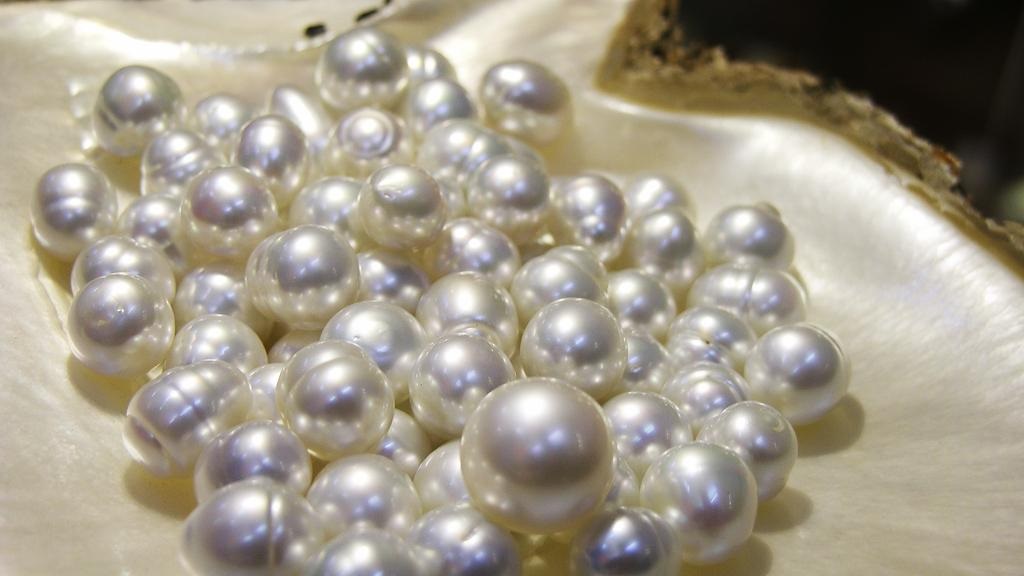
Many cultured pearls need processing before they are sold even if they are natural gemstones. Alternatively, Tahitian pearls are exception. They get delivered in the same harvested state. This is because like other cultured varieties, Tahitian pearls don’t need coloring or bleaching to create dramatic effects. It already contains rich color shades and luster, so the pearl processing risk gets averted.
Surface quality and grading
Pearl surface quality is determined by the nacre layering smoothness. Naked eyes can see some imperfections, which are on the exterior surface but there are invisible surface blemishes that need specific techniques. Surface quality is a crucial factor that helps to determine pearl grading. It will depend on –
- Spotlessness degree
- Bumpiness amount
- Pits quantity
- Rings number
- Wrinkles extent
Four categories of pearl surface grading
Look at this category list to understand.
- Category A – Perfectly clean and flawless with outstanding luster. Minor allowable blemishes are less than 10%.
- Category B – Lightly spotted with medium luster. Visible defects covering not more than 30%.
- Category C – Moderately flawed with low to medium luster. Noticeable spots on 60% of surface layer.
- Category D – Heavily blemished or spotted. Obvious flaws above 60% on outer surface.
Obviously, more flawless pearl means more higher its value. As pearls get produced by wild oysters in natural way, nature leaves its mark. Finding a perfect pearl is extremely rare. For pearl lovers, flaws add unique and interesting character which is not imitated.
Long cultivation periods
For 2 to 3 years, black lip oysters get nurtured in the pearl farm or in the sea. It gives oyster sufficient time to produce premium quality pearls. Long cultivation period also adds to secretion of more and more nacre as well as high luster. Multiple layers get accumulated on the pearl surface. More layers of nacre means large, strong and durable outer surface of a superior gem.
Tips to identify a real Tahitian pearl
- Real pearls are rarely perfect, so look for small irregularities in its shape. Fake pearls are too perfect with same luster on every part.
- Real pearl has little gritty or rough texture, when rubbed against front teeth, whereas fake ones are perfectly smooth.
- Real pearls outer layer are not smooth, so when rubbed against each other causes friction, whereas fake ones glide past one another as their coating is smooth.
